

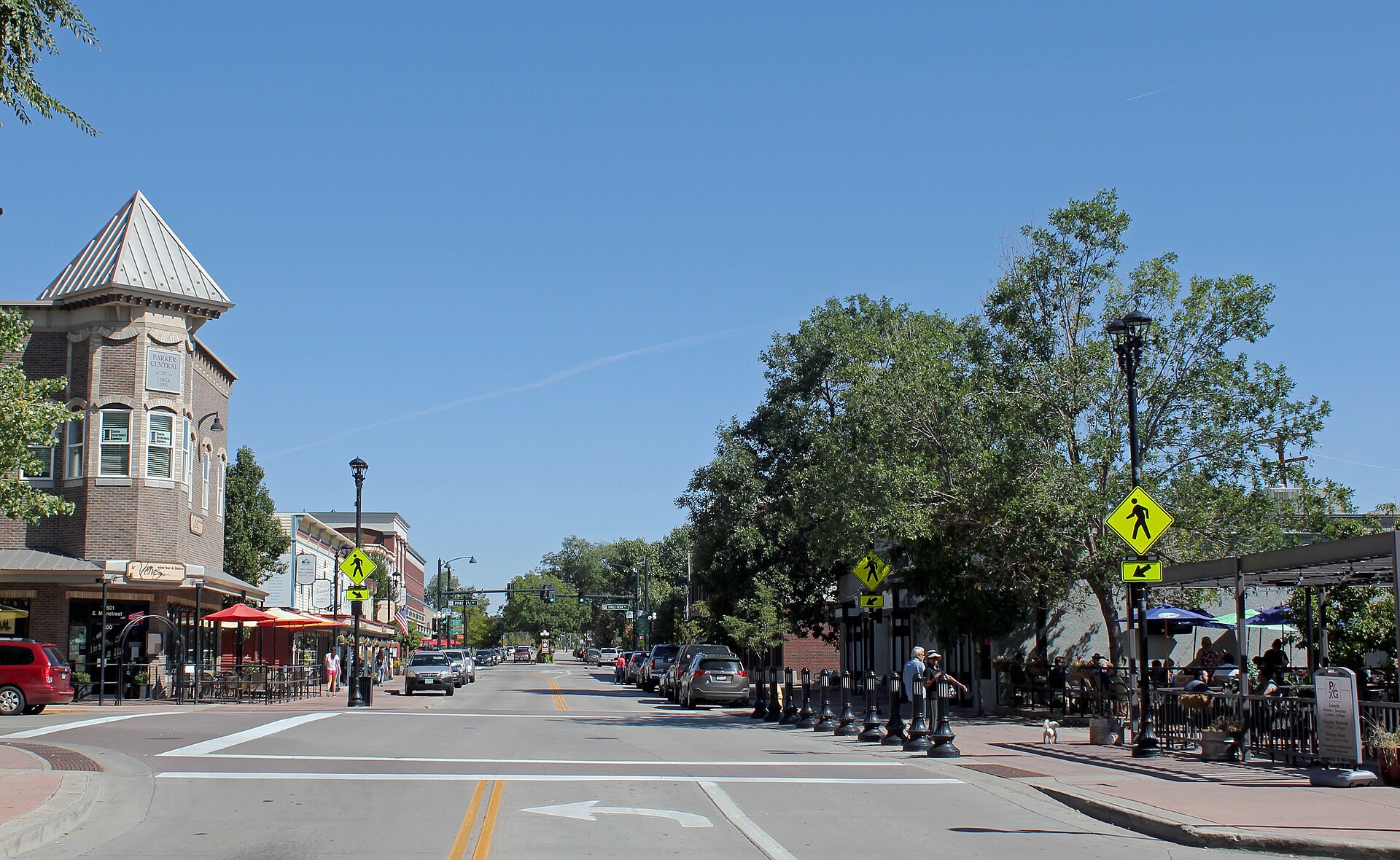
A commercial property auction makes the most sense when the value is hard to pin down, the seller needs a firm closing date, or carrying costs are eating the equity. Online platforms report list-to-close times under 100 days. The trade-offs are a buyer fee that comes out of bids, and a buyer pool that skews toward cash.

Table of Contents
A commercial property auction in Denver used to carry a stigma. People assumed it meant distress. That has changed. National platforms are running more volume, and owners use auctions as a deliberate pricing strategy, not as a last resort. Still, an auction is a tool, and it fits some properties far better than others. Below we walk through the timelines, the fee math, the Front Range market data and the cases where we’d tell a client to list traditionally instead.
Why is the commercial property auction getting more attention right now?
The short answer is that buyers and sellers disagree on price, and an auction settles the disagreement on a date certain.
The 10-year Treasury was at 5.09% on October 16, 2026 and 4.96% on October 22, according to the Federal Reserve’s FRED data. Commercial loans price off that rate, so when it sits near 5%, buyers re-underwrite. Sellers anchored to a value from two or three years ago often find offers coming in well below what they expected. A traditional listing can sit for months while both sides wait for the other to blink.
Cap rate spreads were already thin. First American put the national transaction cap rate about 1.9 points over the 10-year in Q2 2026, against a 35-year average of about 3.2 points. With the 10-year hovering near 5%, there’s more room for cap rates to rise than to fall. Waiting for the market to come back to your number is a bet, not a plan.
Loan maturities add pressure. Trepp’s CMBS special servicing rate rose to 11.20% in June 2026 and was still 11.09% in July, per Trepp data reported by CommercialSearch. Owners facing a refinance they can’t make often need a sale with a fixed timeline, and an auction provides that.
How fast does a commercial property auction close?
Faster than most traditional sales, and the dates are set in advance.
| Platform | Reported timeline | Source and date |
|---|---|---|
| Auctions by Ten-X | Under 100 days list to close on average: 45-day marketing period, 2-day bidding window, 30-day closing | LoopNet/Ten-X help center |
| Crexi Auction | 77 days list to close on average, 11 bidders per property | Crexi, Q1 2026 results |
These are the platforms reporting their own numbers. They’re useful benchmarks, not guarantees. A property with title issues, environmental questions or a messy rent roll will not hit those averages on any platform.
The real advantage is the structure. Due diligence materials go into a data room before bidding opens, so buyers do their homework up front. That means fewer surprises after the contract is signed and fewer deals that fall apart at day 45 of due diligence.
How does a commercial property auction work, step by step?
Every platform has its own rules, so read the agreement. But most online auctions follow the same basic sequence.
- Listing agreement and reserve. The seller signs with the platform, usually through a listing broker, and sets the reserve, which is the lowest price they will accept.
- Marketing period. The property is marketed like any listing, with the auction date published up front. On Ten-X that period runs about 45 days.
- Data room and tours. Buyers review the due diligence package and tour the property before they bid, not after.
- Bidder registration. Platforms typically require bidders to register and show proof of funds or financing before they can bid.
- Bidding window. Bidding opens and closes on set dates. Many platforms extend the clock when late bids come in, so the property doesn’t sell in the last second to whoever clicked first.
- Contract and deposit. The winning bidder signs a purchase agreement on short notice and posts earnest money. Auction contracts often carry fewer contingencies than a negotiated deal, because the buyer did the diligence before bidding.
- Closing. Closing follows on a fixed schedule, about 30 days on Ten-X.
The key difference from a traditional listing is when the risk gets resolved. In a negotiated sale, the buyer ties up the property first and investigates later. In an auction, the investigation happens first, and the contract that comes out of it is closer to a done deal.
Who really pays the buyer’s premium?
Here’s the part most sellers miss. The buyer pays the fee on paper, but it comes out of the seller’s price.
For auctions held in December 2026 and later, Ten-X sets its buyer transaction fee at either 3% or 5% of the winning bid, property by property, with a $20,000 minimum. A disciplined buyer doesn’t budget the bid. They budget the all-in cost, then back into the bid. Here’s the math on a 3% property.
| Sample: buyer’s math | Amount |
|---|---|
| Buyer’s all-in ceiling | $2,000,000 |
| Buyer fee | 3% of winning bid |
| Maximum bid ($2,000,000 / 1.03) | $1,941,747.57 |
| Fee (3% x $1,941,747.57) | $58,252.43 |
| Total buyer cost | $2,000,000.00 |
The seller’s price is $1,941,747.57, not $2,000,000. On a 5% property, the same buyer’s maximum bid drops to $1,904,761.90 ($2,000,000 / 1.05). For agents, this is the single most important number to explain to a seller before they sign a commercial property auction agreement. An auction only wins if competition pushes the bid above what a negotiated sale would have produced, by more than the fee.
Does a faster sale pay for the fee?
Sometimes. It depends on what the property costs to hold. Here’s a sample vacant building in Parker worth $2,000,000, with a $1,200,000 interest-only loan at a sample 7.00% rate.
| Monthly carry (sample) | Formula | Amount |
|---|---|---|
| Interest | $1,200,000 x 7.00% / 12 | $7,000.00 |
| Property tax | $2,000,000 x 25% x (85.123 / 1,000) / 12 | $3,546.79 |
| Insurance, utilities, upkeep | Sample figure | $1,500.00 |
| Total monthly carry | $12,046.79 |
The tax line uses Colorado’s 25% assessment rate for improved commercial property in tax year 2026 and a sample total levy of 85.123 mills for a Parker tax area. Your actual levy depends on the parcel’s tax area, and a parcel inside a Douglas County metro district can carry a much higher levy, which makes holding costs worse.
If an auction closes in three months and a traditional sale would take six, the seller saves three months of carry: 3 x $12,046.79 = $36,140.37.
On this sample, the time savings ($36,140) don’t fully cover a 3% buyer fee ($58,252). The auction has to make up the difference through competitive bidding or by avoiding a deal that falls apart and restarts the clock. That’s an honest way to frame it for a client. Speed alone rarely justifies an auction. Speed plus price discovery plus certainty can.
Reserve or absolute: which auction format fits?
Most commercial property auction listings are reserve auctions. The seller sets a minimum price, and if bidding doesn’t reach it, the seller can walk away. That protects the downside, but it also caps the urgency. Buyers know the seller has an exit, and some will bid more cautiously because of it.
In an absolute auction, the property sells to the highest qualified bidder no matter the price. That draws the most aggressive bidding because buyers know a deal will happen. It also puts the full risk on the seller. Absolute auctions fit best when the seller must sell, such as a court-ordered sale, an estate that needs to settle, or a partnership dissolution with a hard deadline.
For most Front Range owners, a reserve auction with a reserve set from real underwriting is the practical middle ground. A reserve set from hope is the most common way auctions fail.
Which Front Range properties are good auction candidates?
The best fits are properties where nobody really knows the value.
Commodity office is the obvious one. CoStar puts metro Denver office vacancy at 17.8% and the CBD at 32.1% as of October 2026. Office cap rates have risen to about 8.8%, up from a low of 7% in mid-2021, and some trades are clearing far below their last sale. Belleview Tower in the Denver Tech Center sold at roughly a 51% discount to its 2019 price. In a market like that, a broker’s opinion of value on an older, half-empty building is a wide range at best. An auction with real bidders tells you what the building is worth today.
Older industrial is another. CoStar has Denver industrial vacancy at 9.2%, a two-decade high, with asking rents down 1.4% over the past year. Buildings built before 1980 lost about 1.7 million square feet of net occupancy in that span, while newer product with higher clear heights kept leasing. When the comps are newer buildings your property can’t compete with, pricing an older warehouse gets hard.
Other strong candidates:
- Estate and trust sales where the heirs need a clean, documented process
- Partnership breakups where the partners don’t trust each other’s number
- Loan maturities with a hard deadline
- Unusual properties with a small, scattered buyer pool, like churches, special-purpose buildings or odd land parcels
- Properties a seller wants sold, not listed, by a fixed date
If your property is under financial pressure, our distressed asset advisory page covers the broader set of options.
How does the rest of the Front Range compare?
Denver and Colorado Springs are telling different stories by property type, and that changes the auction math. Here is where vacancy stands, per CoStar’s October 12, 2026 market reports.
| Property type | Denver vacancy | Colorado Springs vacancy |
|---|---|---|
| Office | 17.8% | 11.5% |
| Industrial | 9.2% | 6.7% |
| Retail | 4.4% | 4.8% |
Retail is tight in both markets, which usually means a traditional listing will find buyers. Office and industrial in metro Denver carry the most pricing uncertainty, which is where a commercial property auction earns its fee. Colorado Springs office sits between the two. For more on the southern market, see our Colorado Springs commercial real estate page.
When should you skip the auction and list traditionally?
When the market already agrees on the value, an auction mostly just adds a fee. CoStar has metro Denver retail vacancy at 4.4% as of October 2026, with single-tenant net-lease deals under $5 million averaging cap rates in the low-5% range. A well-leased neighborhood retail center or a credit-tenant pad usually draws plenty of offers through a normal marketing process.
The same goes for tight suburban submarkets. Office vacancy in Parker/Castle Rock is 5.7%, a fraction of the metro rate, per CoStar. A clean building there has a known value and a ready buyer pool. Our Parker commercial real estate page has more on that submarket.
The bigger Front Range issue is owner-user product. Many buyers of small office condos, flex units and service buildings in Parker, Castle Rock and the south metro are business owners using SBA financing. Those loans take time to underwrite and close, and a 30-day auction closing period can push them out of the bidding entirely. If your best buyer is an owner-user with a lender, an auction can shrink your buyer pool instead of growing it. Our SBA 504 loan guide explains why those buyers need more time.
Also watch the reserve. On a reserve auction, the property doesn’t sell if bids fall short, and the “no sale” is visible to the market. Set the reserve from real underwriting, not from what the seller hopes the building is worth.
What should be in the data room before bidding opens?
A thin data room costs money. Buyers who can’t verify something either bid lower to cover the risk or don’t bid at all. Before a commercial property auction goes live, we’d want this package complete:
- Title commitment and copies of recorded exceptions
- ALTA survey, or the most recent survey available
- Phase I environmental site assessment
- Property condition report, including roof and HVAC age
- Rent roll, all leases and amendments, and tenant estoppels where possible
- Trailing 12-month operating statement plus the prior two years
- CAM reconciliations and current property tax bills
- Service contracts, warranties and utility history
- Zoning verification letter from the town or county
- For condos: the declaration, bylaws, HOA budget and reserve study
Most of this is the same package a traditional buyer would request during due diligence. The difference is that it has to be ready on day one, not day 30.
Common mistakes sellers make with a commercial property auction
- Measuring the result against the gross bid. The buyer fee comes out of your price. Compare net to net.
- Setting the reserve from an old appraisal. A value from 2022 underwriting doesn’t hold at today’s rates.
- Going live with gaps in the data room. Every unanswered question becomes a discount.
- Auctioning owner-user product. If the natural buyer needs SBA financing, the timeline works against you.
- Skimming the pre-auction offer rules. Know whether you can accept an offer before bidding opens, and what it costs you.
- Treating a no-sale as harmless. A failed auction is public, and the next buyer will know it.
Do you need a broker for a commercial property auction?
The platform runs the technology and the bidding. It doesn’t know your building, your submarket or your likely buyer. A local broker’s job in a commercial property auction is to make sure the property shows up ready: a defensible reserve, a complete data room, accurate marketing and direct outreach to the buyers most likely to compete.
That outreach matters more than most sellers expect. National platforms bring national eyeballs, but the buyer who pays the most for a Front Range building is often a local investor, a neighboring owner or a 1031 buyer with a deadline. Getting those people registered and bidding is what turns a commercial property auction from a fee into a premium. If a 1031 buyer is in the mix, our Colorado 1031 exchange guide explains how their timelines work.
A broker should also tell you when an auction is the wrong call. If the honest answer is that a traditional listing will net you more, you should hear that before you sign anything.
What would we do before recommending an auction?
We’d run the same analysis either way, then compare the two paths side by side:
- Underwrite the property as a buyer would at today’s rates and cap rates, not last cycle’s.
- Calculate the seller’s net under both scenarios, with the buyer fee backed out of the auction bid.
- Price the carry for each month the property sits.
- Identify the likely buyer. Cash investors favor auctions. SBA owner-users usually don’t.
- Read the auction agreement closely, including the reserve, pre-auction offer rules and what happens if the reserve isn’t met.
That starts with a realistic value. Our commercial property valuation page explains how we build one, and our guide to selling commercial property covers the traditional path in more detail.
This is general education, not legal or tax advice. Have a real estate attorney review auction terms before you sign. All loan, tax and cost figures above are samples. Zoning and tax figures vary by parcel, so verify your specific property with the town or county before relying on them.
Want a second opinion on your exit?
If you’re weighing a commercial property auction against a traditional sale, we’re glad to run the numbers with you, with no pressure either way. Reach out through our contact form.
Sources
- Federal Reserve Bank of St. Louis (FRED), 10-Year Treasury Constant Maturity (DGS10) – Oct 16 and Oct 22, 2026
- LoopNet/Ten-X, Auctions by Ten-X – accessed Oct 26, 2026
- LoopNet/Ten-X, Buyer fee on Auctions by Ten-X – updated Oct 8, 2026
- Crexi, Crexi Auction Q1 2026 Results – Apr 16, 2026
- CommercialSearch, 2026 Special Servicing Rates (Trepp data) – Aug 27, 2026
- First American, Risk Premium on Commercial Real Estate Nears 35-Year Low – Aug 26, 2026
- CoStar, Denver Office, Industrial and Retail Market Reports – Oct 12, 2026
- CoStar, Colorado Springs Office, Industrial and Retail Market Reports – Oct 12, 2026
- Douglas County Assessor / Town of Parker – mill levies, tax year 2025
Leave a Reply